

How we teach children to read
In 2022, St. Francis changed how we teach reading. We moved away from the balanced literacy approach used in most schools and adopted structured literacy, an explicit, sequential method grounded in the science of reading.
Twelve of our teachers have since trained in it. Three completed LETRS, a two-year program requiring 160 hours of coursework. Our approach was written up in a national literacy journal and covered by the Quincy Herald-Whig.
We're the only Catholic school in Quincy teaching reading this way. Here's what it means for your child.
What we stopped doing, and why
Coming out of the pandemic, our teachers looked hard at the results and decided the approach wasn't serving enough of our students.
Balanced literacy
For years, most schools taught reading through balanced literacy: children were encouraged to use pictures and context to guess at unfamiliar words. It works for children who would learn to read almost regardless of method. It leaves everyone else behind.
Structured literacy
Structured literacy does the opposite. Children are taught, directly and in order, how written English actually works: individual sounds, letter combinations, syllable patterns, spelling rules, and how words are built. Nothing is left to be inferred.
"We were using reading prompts and reading models that weren't supporting them as long-term readers. We were asking them to look at the pictures, look at the context. That wasn't drawing enough attention to the words."
Jamie Marshall, K–4 Literacy Intervention · Quincy Herald-Whig (opens in new tab)
Fast, multi-sensory, and hands-on
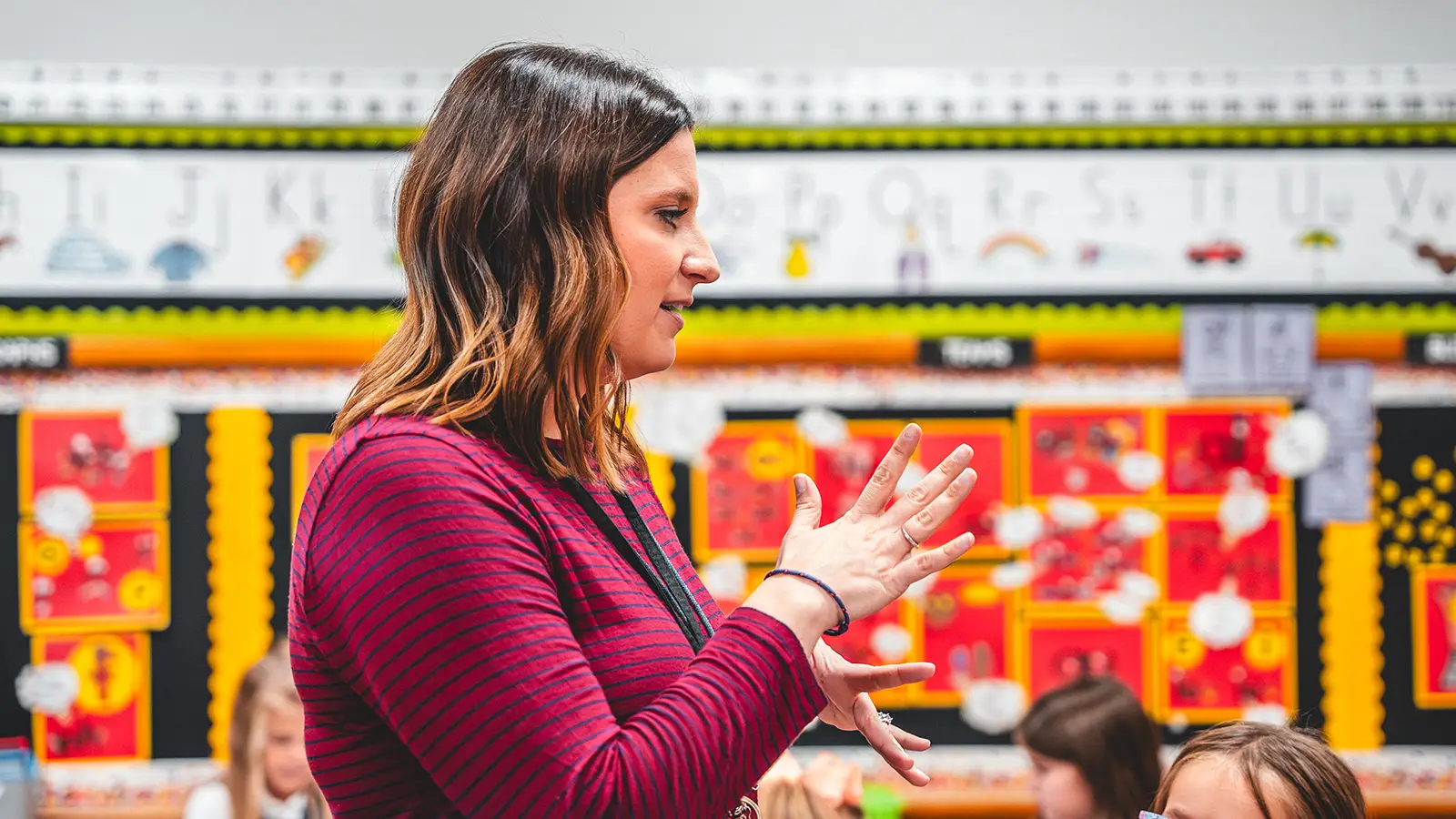
A literacy session at St. Francis moves quickly. In a few minutes, students:
- Review sound cards
- Stack them into words
- Trace letters in sand
- Work through vowels
- Find sound patterns
- Pound out syllables
Then comes a focused mini-lesson, a story, and practice.
"They're seeing it, hearing it, touching it."
Julie Radel, Principal
That's the multi-sensory part, and it's deliberate. Children learn a sound by hearing it, seeing it, saying it, and writing it in the same lesson. It holds attention, and it builds recall that sticks.
Trained, not self-taught
Seven staff members trained in IMSE's comprehensive Orton-Gillingham approach, nine in morphology (how words are built), and five in both. Three teachers went further and completed LETRS (Language Essentials for Teachers of Reading and Spelling) over two years.
"What we're doing now really is systematic, sequential. It's explicit, and it is meant to grow with the child as a developing reader. We can go as fast as we can, we can go as slow as we must."
Jamie Marshall · Quincy Herald-Whig (opens in new tab)
The people doing the work
Three St. Francis teachers completed the full LETRS program in 2024 after two years of coursework and study.
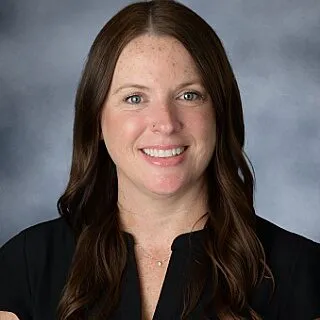
Sarah Hull
Kindergarten Read bio →
Lesley Failor
First Grade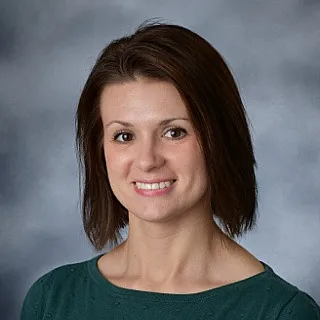
Jamie Marshall
K–4 Literacy Intervention Read bio →"I'm not aware of another school in our area that has that many educators in the general ed setting and in the supportive staff setting that can help our students in this way who have actually been trained. I know tons of educators have done their own research, but not ones that have been trained."
Jamie Marshall · Quincy Herald-Whig (opens in new tab)
Built for the students who struggle. Better for everyone.
The common assumption is that structured literacy is a remedial program. It isn't. It's simply how reading is best taught, and it happens to be indispensable for children who would otherwise fall behind.
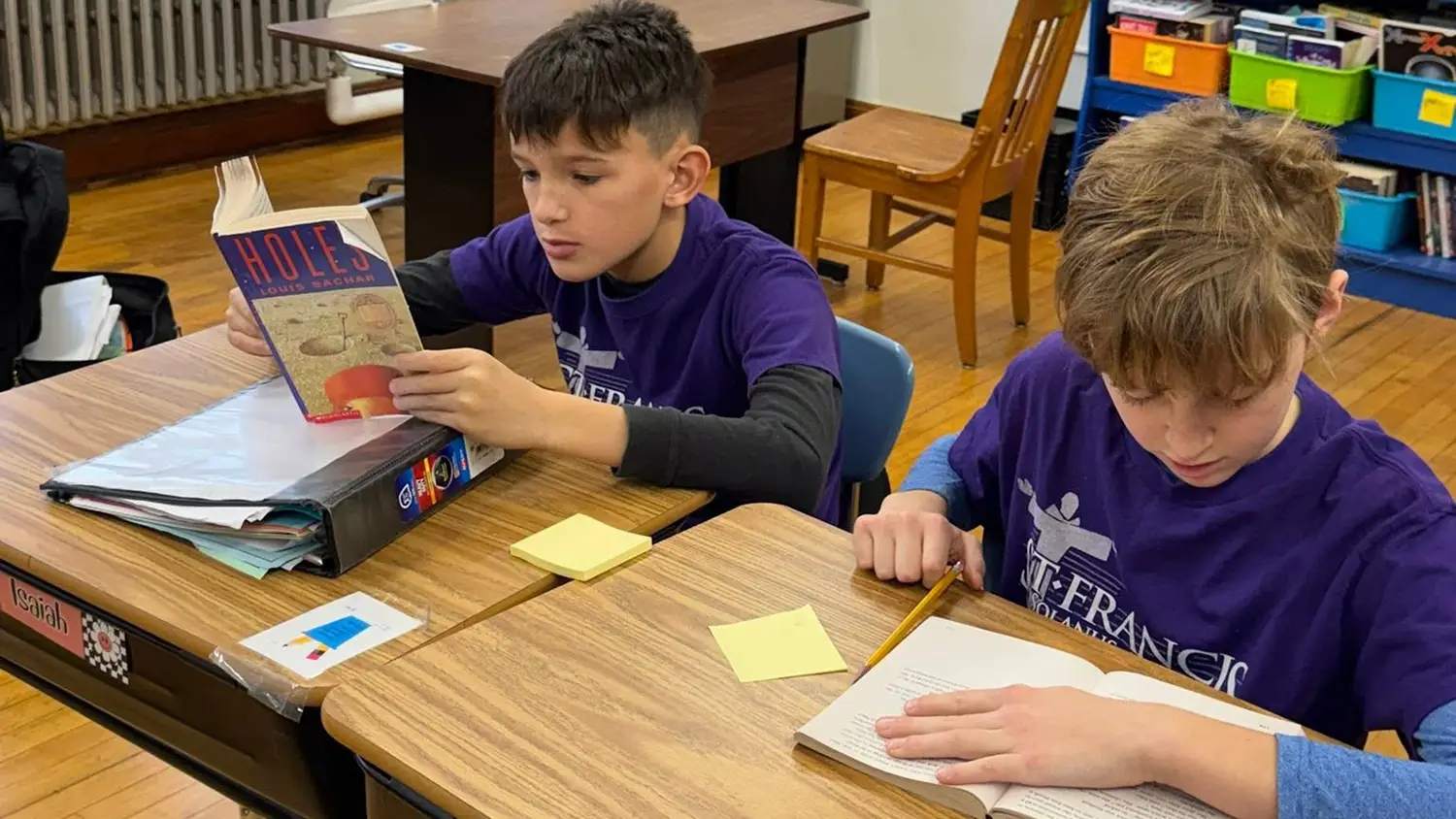
Students who learn to read easily
Gain spelling accuracy, vocabulary, and the ability to decode unfamiliar words in later grades, when texts get harder and pictures disappear.
Students with reading weaknesses
Get explicit instruction in the phonics and phonemic awareness they'd otherwise be expected to absorb on their own.
Students with dyslexia
Receive an Orton-Gillingham based approach, the method most widely recommended for dyslexic learners, as part of ordinary classroom instruction.
Students who need more
Work with trained intervention teachers in small groups, K–4 with Mrs. Marshall and 5–8 with Mrs. Cearlock.
"The exciting thing about structured literacy and IMSE is that we are offering everybody what the struggling learners need from the get-go."
Jamie Marshall · Quincy Herald-Whig (opens in new tab)
Recognized beyond Quincy
Other people have noticed the change too.
Institute for Multi-Sensory Education
IMSE featured St. Francis Solanus in its national journal, highlighting improved learning outcomes in the early elementary grades across the 2022–23 and 2023–24 school years.
Read the article → (opens in new tab)Quincy Herald-Whig
Covered our shift to structured literacy, with interviews with our principal and literacy intervention teacher.
Read the article → (opens in new tab)ADAC
A representative from ADAC, which helps private schools obtain resources for students with special needs, visited St. Francis and praised our Orton-Gillingham based approach.
Early results, honestly stated
We're several years in, and the clearest change is this: fewer of our first and second graders need intervention at all. Students who have learned to read this way from the beginning are arriving in later grades with skills their peers previously had to be pulled out to acquire.
We're not claiming to have it solved.
"We do not have it all figured out. We're trying to be better as a staff about coming together to look at the data, to look at the supports we're offering to not only support our students but to support each other. We're wanting to learn. We don't want to settle that what we're doing now is perfect."
Jamie Marshall · Quincy Herald-Whig (opens in new tab)
That's the posture we want. It's also the reason this worked in the first place.
What is structured literacy?
Structured literacy is an approach to teaching reading that explicitly and systematically teaches how written language works: individual speech sounds, letter patterns, syllable types, spelling rules, and word structure. It's taught in a deliberate sequence, with each skill building on the last, rather than expecting children to infer patterns from exposure to books.
What is the science of reading?
The science of reading is the body of research, accumulated over decades across cognitive science, linguistics, and education, on how the human brain learns to read. It consistently finds that most children need explicit instruction in phonics and phonemic awareness. Structured literacy is how that research is put into classroom practice.
How is this different from how reading is usually taught?
Most schools have used balanced literacy, which encourages children to identify unfamiliar words using pictures, context, and the first letter. Structured literacy teaches children to decode the word itself. St. Francis moved away from balanced literacy in 2022.
Which reading program does St. Francis use?
We use the Institute for Multi-Sensory Education's structured literacy approach, which is based on the Orton-Gillingham method. Twelve of our teachers have trained in it, and three have also completed LETRS (Language Essentials for Teachers of Reading and Spelling), a two-year program in the science of reading.
Do other schools in Quincy teach reading this way?
In the Quincy Herald-Whig, our literacy intervention teacher said she is not aware of another area school with as many educators formally trained in it.
Will this help my child if they have dyslexia?
The Orton-Gillingham approach our instruction is based on is the method most widely recommended for students with dyslexia. At St. Francis, it isn't a separate pull-out program. It's how reading is taught in the regular classroom, with additional small-group intervention available K–4 and 5–8.
What if my child is already a strong reader?
They benefit too. Structured literacy builds spelling accuracy, vocabulary, and the ability to decode unfamiliar multi-syllable words, skills that matter most in the upper grades when texts get harder. As our intervention teacher puts it, the approach gives every student what struggling readers need from the start.
What grades does this cover?
Structured literacy instruction begins in kindergarten and continues through the elementary grades, with trained intervention teachers supporting students in K–4 and 5–8.
My child is behind in reading. Can you help?
Call the school office at (217) 222-4077. We'll talk honestly about where your child is and what support would look like here. Our intervention teachers are trained specifically for this.
What our families say
Lessons come to life
The teachers at St. Francis bring lessons to life, creating engaging classrooms where students feel excited about learning. What stands out most is their strong training in literacy instruction, ensuring that every student grows as a confident, capable reader and communicator.
 John & Lindsey Kelly Family
Come watch a literacy lesson.
It's the fastest way to understand the difference. Ask to see a session when you visit, and we'll take you into a classroom.