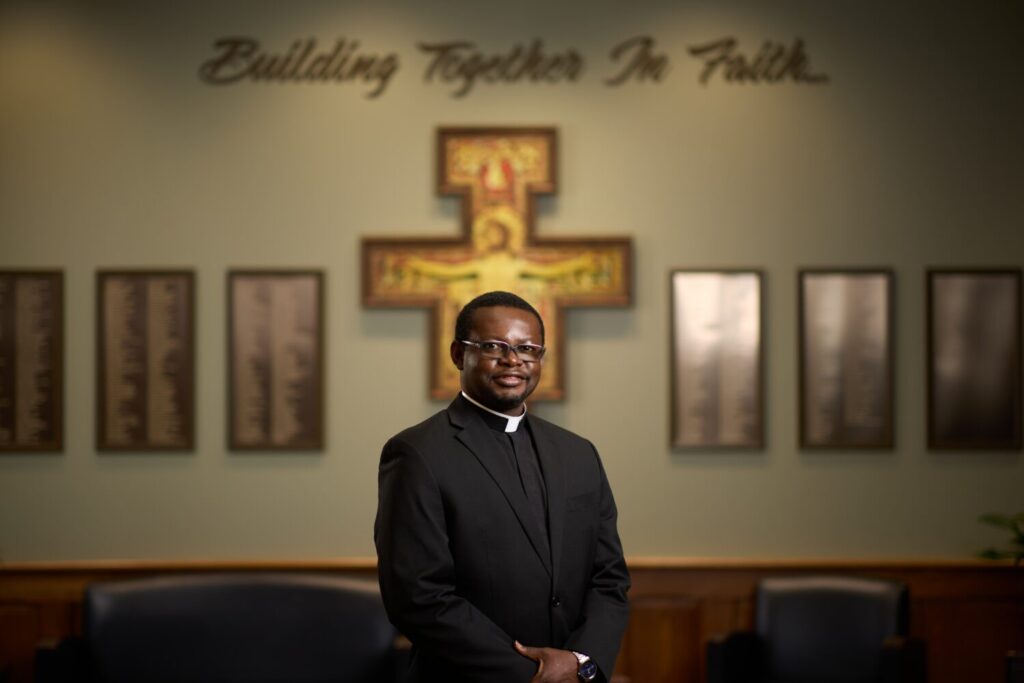
Here are some of the important snapshots to help us prepare our minds for active and fruitful participation in the rich liturgy of the Holy Week. The Holy Week is the sixth and the last week of Lent. It is the week between Palm Sunday and the beginning of Eastertide. It is the most important week in the Church. It begins with the Palm Sunday.
The Palm Sunday recalls the entrance of Christ the Lord into Jerusalem to accomplish his Paschal Mystery. Accordingly, the memorial of this entrance of the Lord takes place at all Masses, by means of the procession or the solemn entrance before the principal Mass, or the simple entrance before other Masses. During the procession, the faithful carry branches and sing Hosanna to the Son of David. A very long gospel called the ‘Passion of the Lord’ is read during Mass, usually by three persons. The passion narrates the suffering, crucifixion and death of our Lord Jesus Christ.
The Paschal Triduum:
Within the Holy Week, the Sacred Paschal Triduum of the passion and resurrection of Christ is the culmination of the entire liturgical year. The Paschal Triduum (three days) begins with the evening Mass of the Lord’s Supper, reaches its high point in the Easter Vigil, and closes with evening prayer on Easter Sunday.
Holy Thursday:
The Chrism Mass may be celebrated in the morning by the bishop with full participation of the clergy and the laity. The blessing of the Oil of the Sick and of the Oil of Catechumens and the consecration of Chrism are carried out by the bishop. After the homily, the priests renew their priestly promises.
The Mass of the Lord’s supper is celebrated in the evening on the parish level. The principal mysteries commemorated in this Mass are the institution of the Holy Eucharist, the Institution of the Priestly Order, and the Commandment of the Lord concerning fraternal charity. After the homily, the Washing of Feet takes place. After Communion, the Blessed Sacrament is transferred in a procession to the Alter of Repose. The faithful are invited to continue adoration before the Blessed Sacrament for a suitable length of time during the night, according to local circumstances.
Good Friday:
On this and the following day, by a most ancient tradition, the Church does not celebrate the Sacraments at all, except for Penance and the Anointing of the Sick. On this day, Holy Communion is distributed to the faithful only within the celebration of the Lord’s Passion; but it may be brought to the sick who cannot participate in this celebration. The principal celebration of the day is the Lord’s Passion, which consists of three parts: the Liturgy of the Word, the Adoration of the Cross, and Holy Communion. During the Gospel, the passion narrative according to St. John is read. Each parish finds a suitable time for the Stations of the Cross before or after the celebration of the Lord’s Passion. The faithful are reminded that on Good Friday and, if possible, also on Holy Saturday until the Easter Vigil, the Easter fast is observed everywhere.
Holy Saturday:
On Holy Saturday, the Church waits at the Lord’s tomb in prayer and fasting, meditating on the Passion and Death and on his Descent into hell and awaiting his Resurrection. The principal celebration is the Easter Vigil. The entire celebration of the Easter Vigil must take place during the night so that it begins after nightfall and ends before daybreak on the Sunday. Of this night’s Vigil, which is the greatest and most noble of all solemnities, there is to be only one celebration in each church. The Easter Vigil is constituted of four parts: 1) the Lucenarium and the Paschal Proclamation (the Exsultet), 2) the Liturgy of the Word, 3) the Baptismal Liturgy and 4) the Liturgy of the Eucharist.
Easter Sunday:
During the Mass on the day of Easter, the Sequence is sung after the second reading.
Fr. Kenneth Ahanonu