Divine Mercy Sunday
The Pillars of Divine Mercy Devotion
In the passion narrative according to Luke 23: 39-43, we read with great enthusiasm how a sentence emanating from the blessed mouth of our Lord Jesus Christ changed the eternal destiny of a man who would have been damned forever. It was one of the criminals crucified with Jesus. Instead of reviling the Lord as did the other criminal, he besought him saying, “Jesus, remember me when you come into your kingdom.” The pronouncement from Jesus, “Amen, I say to you, today you will be with me in Paradise,” is what instantly changed his destiny forever. Although he died the painful death on the cross, his soul enjoys the eternal bliss forever. Imagine how relieved he felt.
In our individual lives, we may have experienced a situation where we have faulted and the consequence was grave. We might have painfully braced up for the worst. All of a sudden, we were made to forgo the consequence. Such a situation is refreshing and liberating. This is called pardon. It is called forgiveness. It is called mercy. Whether we understand it from the angle of one of the crucified criminals or from our individual experiences of forgiveness, mercy is what God grants us always, especially in the sacrament of reconciliation. This is why on the evening of the day of his resurrection, Jesus gave his apostles the power to forgive sins. He said, “Receive the Holy Spirit. Whose sins you forgive are forgiven them, and whose sins you retain are retained” (Jn 20:22-23).
The mercy of God is boundless like the ocean. But we must dispose ourselves to draw from it. In the series of apparitions and heart to heart communications with St. Faustina Kowalska in the 1930s, our Lord instructed her on how to immerse herself in the mercy of God. Through the diary she kept about these mystical experiences, the world has come to learn about Divine Mercy. From this was developed the devotion to Divine Mercy which involves a total commitment to God as Mercy. This involves trusting completely in God, accepting his mercy with gratitude, and trying to be merciful as God himself.
In a visible and structured form, there are five pillars of the Divine Mercy Devotion: the Hour of Mercy, the Image of the Merciful Jesus, the Chaplet of Divine Mercy, the Novena to Divine Mercy, and the Feast of Divine Mercy.
The Hour of Mercy is 3 o’clock, when our Lord died on the cross. It is the time to immerse oneself in prayer even if only for a brief instant, “for at that moment mercy was opened wide for every soul” (Diary 1572). Today, many people recite the Chaplet of Divine Mercy at 3 o’clock.
The Image of the Merciful Jesus: In an apparition in 1931, Jesus said to St. Faustina, “Paint an image according to the pattern you see, with the signature: Jesus, I trust in You. I desire that this image be venerated, first in your chapel, and [then] throughout the world” (Diary 47). Today, this image is seen all over, including perhaps in your rooms and desks.
The Chaplet of Divine Mercy: This great prayer of our time was dictated to St. Faustina by the Lord Jesus Himself on September 13-14, 1935, as a prayer of atonement and for the appeasement of God’s wrath (cf. Diary 474-476). In it, we ask for God’s mercy for ourselves and for the whole world.
The Novena to Divine Mercy: St. Faustina was instructed to write down and make the novena before the Feast of Mercy. It begins on Good Friday. The Lord told her, “I desire that during these nine days you bring souls to the fountain of my mercy, that they may draw therefrom strength and refreshment and whatever grace they need in the hardships of life, and especially at the hour of death” (Diary 1209).
The Feast of Divine Mercy: St. Faustina notes Jesus as saying, “I desire that there be a Feast of Mercy” (Diary 49) and “I desire that the Feast of Mercy be a refuge and shelter for all souls, and especially for poor sinners… It is my desire that it be solemnly celebrated on the first Sunday after Easter.” (Diary 699).
How to celebrate the Feast of Divine Mercy Sunday: Sincerely repent of your sins, place your complete trust in Jesus, do the Divine Mercy novena, go to confession, preferably before that Sunday, receive Holy Communion on the day of the Feast, venerate the image of the Divine Mercy, and be merciful to others through your actions, words, and prayers.
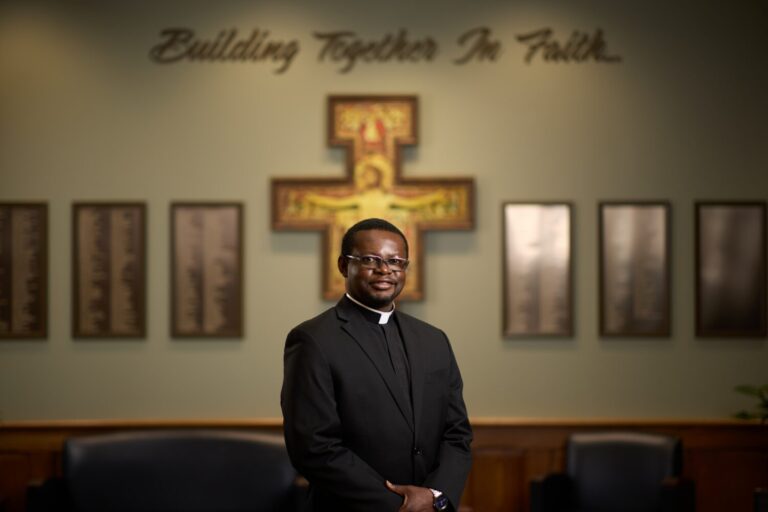
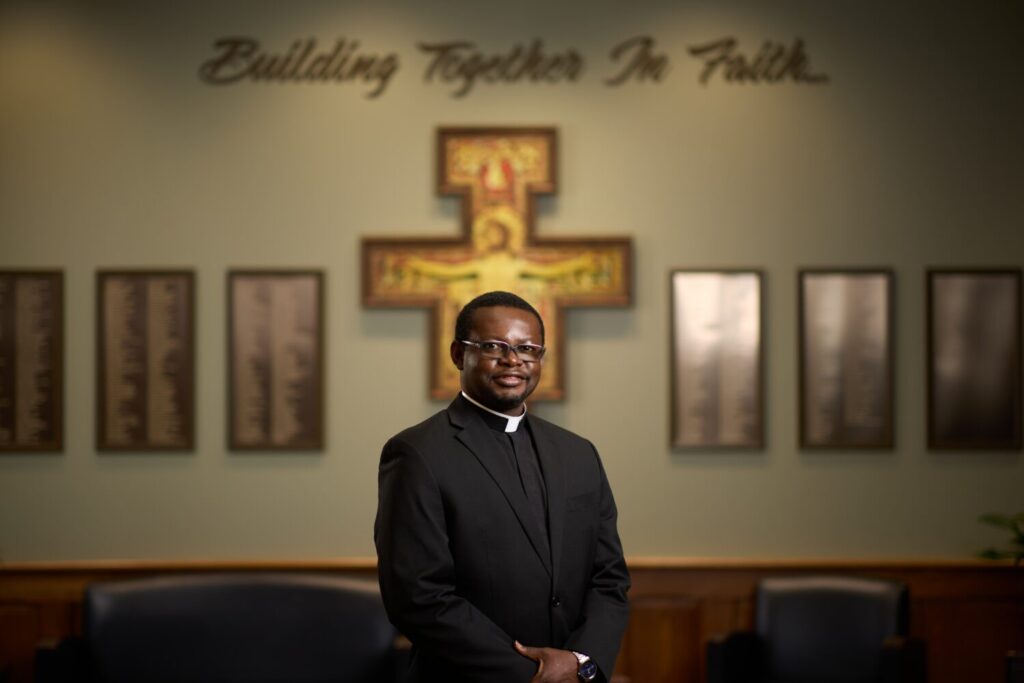
Fr. Kenneth Ahanonu