From Father Ken – Catechesis on the Jubilee 2025 #1
General Introduction
In February 2022, Pope Francis announced that the Universal Church would celebrate a jubilee year in 2025 with the theme, Pilgrims of Hope. The jubilee year coincides with and marks the 2,025th anniversary of the Incarnation of our Lord. To prepare well for this landmark event, the pope enjoined on all to embrace fervent prayers and the study of four documents of the Second Vatican Council: Constitution on the Sacred Liturgy (Sacrosanctum Concilium), Dogmatic Constitution on the Church (Lumen Gentium), Dogmatic Constitution on Divine Revelation (Dei Verbum), and Pastoral Constitution on the Church in the Modern World (Gaudium et Spes).
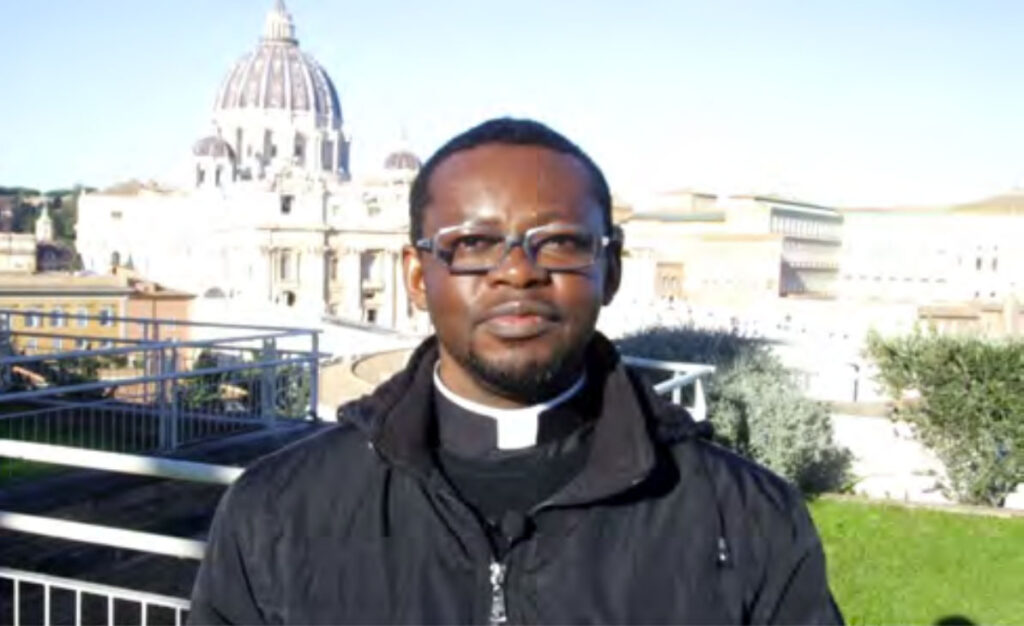
The 2025 Jubilee is here with us. It began with the opening of the Holy Door by Pope Francis at St. Peter’s Basilica, Rome, on December 24, 2024, the eve of Christmas. The jubilee spans 2025 and ends on January 6, 2026, the feast of the Epiphany of the Lord. The jubilee year offers the faithful opportunities to participate in various jubilee events at the Vatican and in their own dioceses. For the events at the Vatican, see the Jubilee Celebration Calendar at https://www.usccb.org/resources/jubilee-celebration-calendar-2025.
One may ask, what is a jubilee year? The word “jubilee” in its modern-day usage depicts a special anniversary, especially that of 25th or 50th. In the Catholic Church, the word “jubilee,” as used in the jubilee year, is derived from the Hebrew word jobel, which means “ram’s horn;” since it was precisely that horn which was used as a trumpet, whose sound indicated to everybody the beginning of the jubilee year.
The jubilee year has a biblical origin. The code of holiness in the book of Leviticus indicates the jubilee year as a year of liberation: “And you shall hallow the fiftieth year, and proclaim liberty throughout the land to all its inhabitants; it shall be a jubilee for you, when each of you shall return to his property and each of you shall return to his family” (Leviticus 25:10).
In the Catholic Church, the jubilee year is a special period now ordinarily every 25th year in which special indulgences are granted. Both in the Hebrew jubilee year of Leviticus and the present Church’s usage, the jubilee year is a time for forgiveness. It stands as a reminder of God’s providence and mercy. It provides people with a privileged time to come back into right relationship with one another and with God.
The first jubilee in the Church was declared by Pope Boniface VIII on February 22, 1300, the feast of the Chair of St. Peter, to mark the beginning of that century. He later recommended that it be observed every 100 years. Various other popes amended the length of the interval between the observances. However, it was Pope Paul II who set the present 25-year interval in 1470.
Today in the Church, we talk of ordinary and extraordinary jubilee years. The holy years of jubilee are ordinary when they occur at regular intervals, that is, 25 years, and extraordinary when they are proclaimed for a special reason, like the extraordinary Jubilee of Mercy of 2016 declared by Pope Francis.
The 2025 Jubilee, which has the theme, Pilgrims of Hope, is a year of hope-hope and trust for a world suffering the impacts of war, social unrest, and the increased threats to the climate.
The jubilee year has a lot for our spiritual and faith formation. Stay glued to the Catechesis on the Jubilee 2025. For more on the jubilee year, visit the United States Conference of Catholic Bishops’ website: https://www.usccb.org/jubilee2025.
Fr. Kenneth Ahanonu